
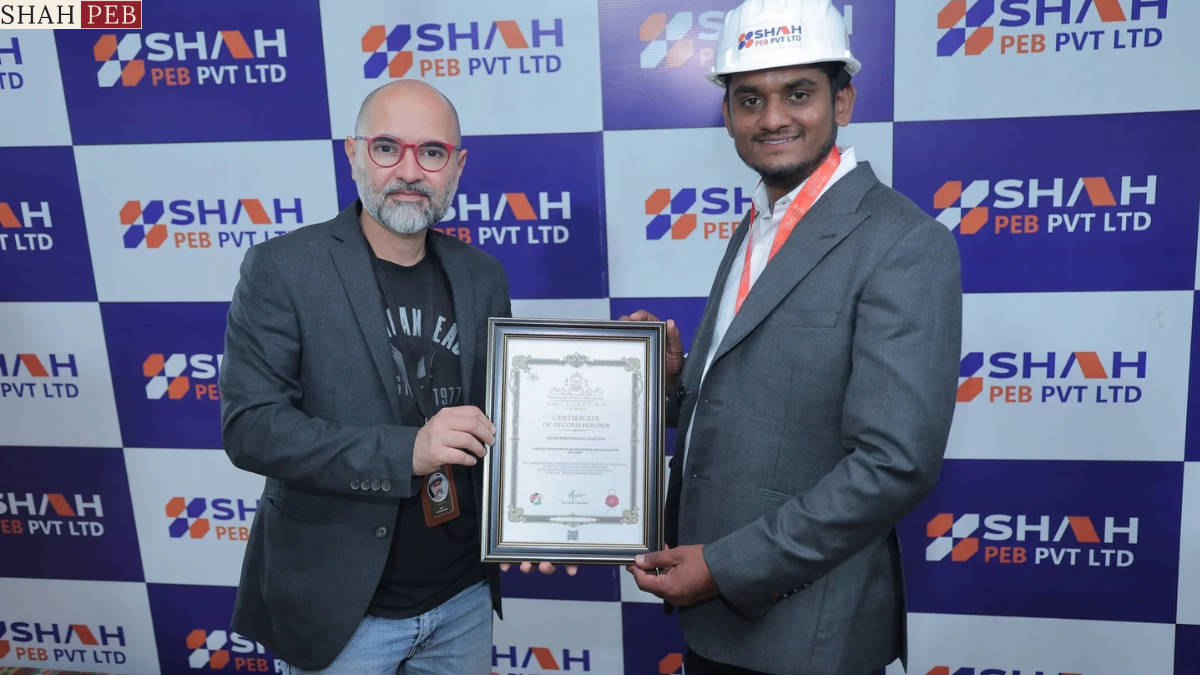
The concept of the fastest PEB erection world record highlights how modern engineering, advanced manufacturing, and efficient construction practices are transforming the steel building industry. Pre-engineered buildings (PEBs) are designed and manufactured with precision before their components reach the construction site. This approach allows structural elements to be assembled systematically, reducing the time required for conventional on-site construction.
PEB erection involves the installation of various structural components, including primary frames, secondary members, roof systems, wall panels, bracing systems, and other accessories. Each component is manufactured according to approved engineering drawings and specifications. Since the parts are prepared in advance, the erection team can focus primarily on assembling and securing the structure at the project location.
The idea behind achieving a fastest PEB erection world record is not simply about completing construction quickly. Speed must be combined with accuracy, safety, structural stability, and proper project coordination. A successful rapid erection process requires detailed planning before materials arrive at the site. Engineers, fabricators, site supervisors, crane operators, and installation teams must work together according to a coordinated schedule.
One of the major advantages of PEB construction is the reduction in on-site fabrication work. Traditional construction can involve several activities being performed directly at the project location. In contrast, PEB components are manufactured under controlled factory conditions. This allows fabrication and site preparation activities to progress simultaneously, helping reduce overall project duration.
Technology also plays an important role in achieving faster erection. Computer-aided structural design, accurate fabrication equipment, modern lifting machinery, and organized material handling can improve productivity. Components can be identified and arranged according to the erection sequence, allowing workers to install structural elements more efficiently.
Site planning is another important factor. Before erection begins, the foundation, anchor bolts, access areas, lifting equipment, and material storage locations need to be properly prepared. A well-planned site minimizes unnecessary movement and helps the erection team maintain a continuous workflow. Cranes and other lifting equipment must also be positioned according to the structural assembly plan.
Safety remains essential even when construction speed is a major objective. Fast erection should never compromise worker protection or structural integrity. Proper lifting procedures, safety equipment, trained personnel, temporary bracing, and inspection at different stages help ensure that the structure remains stable throughout installation.
The concept of record-breaking erection also demonstrates the potential of modern PEB technology for large industrial projects. Warehouses, manufacturing facilities, logistics centers, workshops, and industrial sheds often require large usable spaces and quick project completion. PEB systems can help meet these requirements through engineered components and streamlined installation processes.
Shah PEB provides integrated solutions covering PEB design, manufacturing and erection, supporting industrial construction requirements with an organized approach. From structural planning and precision fabrication to transportation and on-site installation, coordination between different project stages helps improve construction efficiency.
The fastest PEB erection world record represents more than construction speed. It reflects the evolution of engineering methods, manufacturing precision, project management, equipment technology, and skilled erection practices. As industrial infrastructure continues to grow, faster and more organized construction methods can help businesses develop operational facilities within demanding project schedules.
Modern PEB construction therefore demonstrates how engineering and manufacturing can work together to create strong, efficient, and rapidly assembled structures. With proper planning, advanced fabrication, skilled teams, and disciplined site execution, PEB technology continues to set new possibilities for the future of steel construction.